

Quick guide
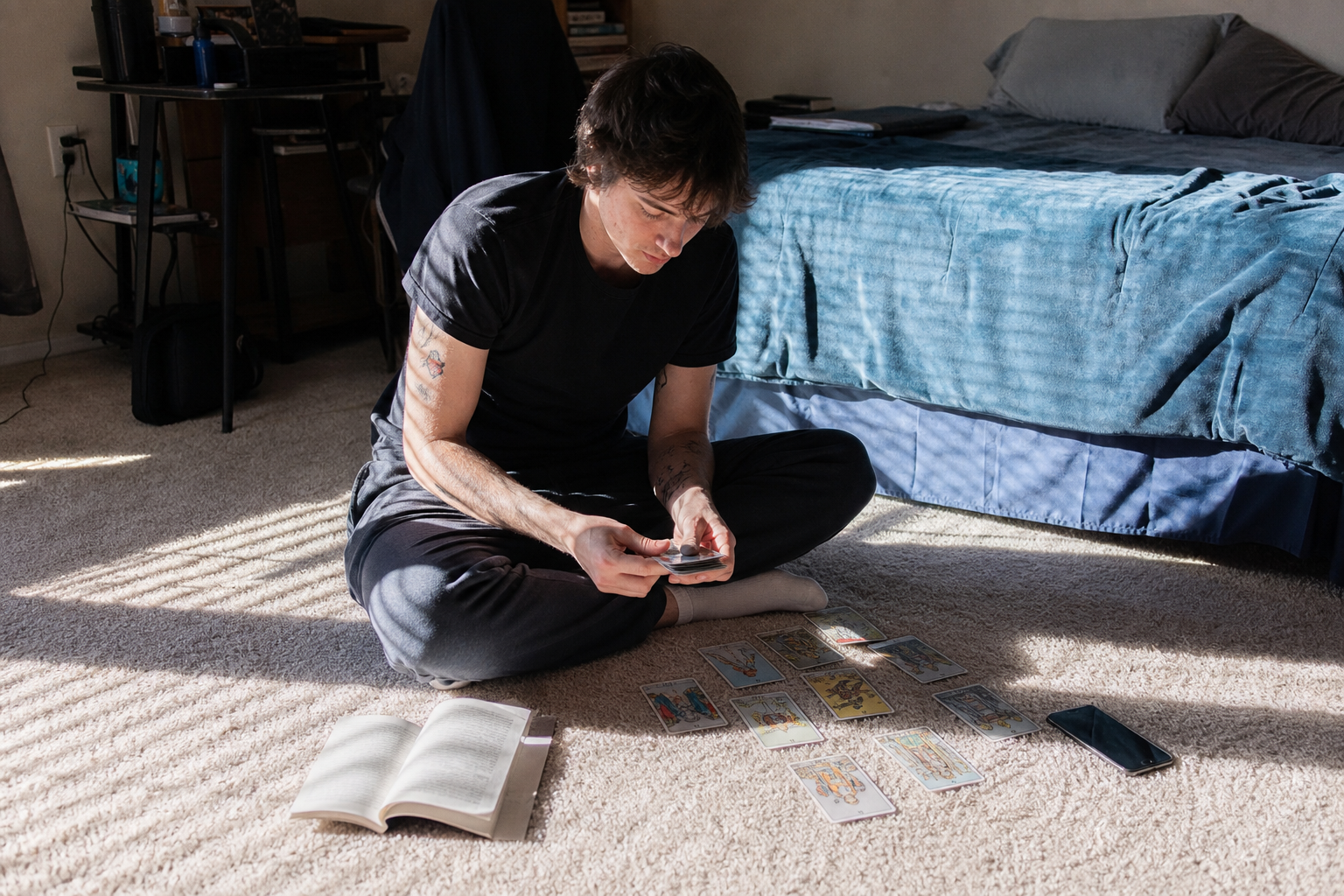
Learning tarot is easier than the size of the deck suggests, because you do not learn 78 cards one at a time. Start with a Rider-Waite-Smith style deck, since nearly every guidebook and online reference describes its images, and its Minor Arcana cards show full scenes rather than bare symbols. Learn the 22 Major Arcana first; they carry the biggest themes and are the easiest to remember. Then learn the four suits (Wands, Cups, Swords, Pentacles) and the meaning of the numbers Ace through Ten, which together let you work out most of the remaining 56 cards instead of memorizing them. Use keywords as a scaffold and the picture as your prompt. Draw one card every morning, write two sentences about it, and check the book at night. After a few weeks add a three-card spread. Avoid the common traps: buying a hard deck first, pulling cards repeatedly for the same question, reading reversals before you know the uprights, and asking the cards about other people’s feelings. A reading cannot predict events, read minds, confirm pregnancy or diagnose illness; treat it as a way to think, and book a professional when you are too close to a question to read it yourself.
Choosing your first tarot deck
The best first deck is one in the Rider-Waite-Smith tradition, either the original 1909 design by Pamela Colman Smith or a close modern version of it. The reason is practical: every Minor Arcana card shows a scene, so a card such as the Five of Pentacles gives you two figures in the snow outside a lit window rather than five coins, and that scene is a memory aid. Most beginner books, apps and online meaning lists describe these exact images, so your references will match your cards.
Decks in the Marseille tradition show only suit symbols on the number cards, and the Thoth deck uses its own dense system; both are worth exploring later, not first. A new RWS-style deck costs about 20 to 40 dollars in the United States and usually comes with a small booklet. The old idea that a first deck must be a gift is folklore, not a rule; buy the one whose pictures you want to look at every day. Encyclopaedia Britannica has a short overview of the deck’s history if you want the background.
| Week | What to learn | Daily practice | Goal by the end |
|---|---|---|---|
| 1 to 2 | The 22 Major Arcana, three or four a day | One card, upright only | Name every Major from its picture |
| 3 | Wands and Cups, Ace to Ten | One card, add a keyword | Explain a pip card from suit plus number |
| 4 | Swords and Pentacles, Ace to Ten | One card, one sentence in a journal | Cover all 40 numbered cards |
| 5 | The 16 court cards | One card, notice who it reminds you of | Tell Pages, Knights, Queens and Kings apart |
| 6 | The three-card spread | One spread every two or three days | Read three cards as one story |
| 7 onward | Reversals, combinations, other spreads | Whatever holds your interest | Reading for friends without the book open |
Learn the Major Arcana first
The 22 Major Arcana are the cards people recognize even if they have never held a deck: The Fool, The Magician, The High Priestess, The Empress, The Emperor, The Hierophant, The Lovers, The Chariot, Strength, The Hermit, Wheel of Fortune, Justice, The Hanged Man, Death, Temperance, The Devil, The Tower, The Star, The Moon, The Sun, Judgement and The World. They are numbered 0 to XXI, and reading them in order tells a rough story that many teachers call the Fool’s journey: a beginner sets out, meets teachers and challenges, loses something, and arrives changed. That story is a memory device, not doctrine, but it works.
Learn three or four Majors a day. For each card, look at the picture for a full minute before reading anything, write down what you see, then compare your notes with the guidebook keyword. Death, for example, is traditionally read as an ending that makes room for something else, not as a physical death. When you can name every Major from its image alone, move on.
Then the suits and the numbers
The 56 Minor Arcana look like a large task until you notice they are built on a grid. Four suits carry four themes: Wands for energy, work and ambition; Cups for feelings and relationships; Swords for thought, truth and conflict; Pentacles for money, home and the body. The suits line up with ordinary playing cards, with Wands as clubs, Cups as hearts, Swords as spades and Pentacles as diamonds, which is why some people learn with a regular deck. Ten numbers carry ten stages, from the Ace as a beginning to the Ten as a completion. Combine suit and number and you have a working meaning for any pip card before you open a book: Three of Cups is early growth in relationships, so a celebration with friends.
The 16 court cards are the hardest part of the deck for most beginners, because they can stand for people, for roles you are playing, or for attitudes. A simple rule to begin with: Pages are learners, Knights are movers, Queens are those who hold and nurture, Kings are those who direct. Add the suit: the Knight of Wands is someone rushing toward a goal.
| Number | Stage | Example card and traditional reading |
|---|---|---|
| Ace | A beginning, a seed | Ace of Pentacles: a new job or a chance to earn |
| Two | A choice or a balance | Two of Wands: planning the next move |
| Three | First growth | Three of Cups: friendship and celebration |
| Four | Stability, sometimes stuck | Four of Swords: rest after strain |
| Five | Conflict or loss | Five of Pentacles: money worry, feeling left out |
| Six | Recovery, help given or received | Six of Cups: nostalgia, an old friend |
| Seven | Assessment, persistence | Seven of Pentacles: waiting for effort to pay off |
| Eight | Movement or mastery | Eight of Wands: things speeding up |
| Nine | Nearly there, the weight of it | Nine of Swords: worry that keeps you up |
| Ten | Completion | Ten of Cups: a settled, happy home |
Keywords or intuition: use both
Beginners are often told either to memorize keyword lists or to ignore the books and trust their gut. Neither works alone. Keywords give you a shared vocabulary so that your Tower means roughly what a reader in another city means by it; without them, a reading becomes a private guessing game. Intuition, in the plain sense of noticing what the picture makes you think of today, gives the keyword a specific edge: the Eight of Pentacles is diligent work, but the detail that catches your eye might be the figure sitting alone, and that might be the point for you.
A practical routine: look at the card, say the first thing you notice, then say the keyword, then join the two in one sentence about your question. The guidebook is a reference, not a script, and your own notes will overtake it within a few months.
- 1. Pick a deckChoose a Rider-Waite-Smith style deck whose pictures you like; skip Marseille and Thoth for now.
- 2. Learn the MajorsThree or four a day, picture first, keyword second, until you can name all 22 from the image.
- 3. Add suits and numbersFour suit themes times ten number stages give you the 40 pip cards; then the 16 courts.
- 4. Draw daily and journalOne card each morning, two sentences, check the book at night; add a three-card spread after a few weeks.
A daily one-card practice and the three-card spread
The single most useful habit is one card a day. Shuffle, draw, look for a minute, and write two sentences: what the card traditionally means and what it might point to today. At night, add one line about whether it connected to anything. This takes five minutes and will teach you the deck faster than any course. There is no wrong way to shuffle; pick a method and keep it.
After two or three weeks, add a three-card spread for questions that need more than a prompt. Lay the cards left to right. The classic positions are past, present and future, but for decisions the set situation, obstacle, advice is more useful, because it ends on something you can do. Read the three as a sentence, not as three separate verdicts. Resist pulling extra cards to clarify; one clarifier at most, and only if the spread is unreadable.
- Write your question at the top of a journal page, phrased about your own choices.
- Shuffle until the deck feels mixed, then cut once.
- Draw three cards and lay them left to right without turning them over.
- Turn them one at a time: situation, obstacle, advice.
- Say one sentence per card, then one sentence joining all three.
- Write down one concrete action the reading suggests, and revisit the page in a week.
Common beginner mistakes and when to book a reader
Most early frustration comes from a handful of habits. Reading reversals before you know the upright meanings doubles the workload for little gain; read everything upright for the first two months. Pulling card after card for the same question turns a reflection into a slot machine. Asking what another person feels or will do invites guesswork, because no reading can see into someone else’s head. And buying a beautiful but hard deck first makes every session a translation exercise.
Book a professional when a question matters and you cannot see it clearly yourself, when you want to watch an experienced reader build a story from a spread, or when you simply want a conversation rather than a solo exercise. Choose someone who explains their method, keeps the decisions with you, and never claims to predict, diagnose, or remove a curse or block for a fee. Health concerns go to a doctor, and if you are in crisis in the United States, call or text 988.
Key takeaways
- Begin with a Rider-Waite-Smith style deck; its illustrated scenes match most guidebooks and are easier to remember.
- Learn the 22 Major Arcana first, three or four a day, picture before keyword.
- The 40 pip cards come from four suit themes times ten number stages; the 16 courts are learners, movers, nurturers and directors.
- Keywords give a shared vocabulary; intuition gives the specific edge. Use both in one sentence.
- One card a day plus a short journal entry is the fastest way to learn; add a three-card spread after a few weeks.
- Skip reversals and clarifier pulls at first, and book a reader for questions you are too close to.
Related reading
- Tarot Beginners Guide
- Knowing Tarot Cards as a Beginner
- Understanding Tarot for Beginners
- Helpful Tips for Tarot Beginners
- Want to Read Tarot? Learn How
- How to Shuffle Tarot Cards
- How to Pick the Right Tarot Deck
- Reading Your Own Tarot Cards
Frequently asked questions
1. What is the best tarot deck for a beginner?
A deck in the Rider-Waite-Smith tradition, either the 1909 original illustrated by Pamela Colman Smith or a close modern version. Its Minor Arcana cards show full scenes, which are easier to remember, and almost every guidebook and online reference describes these images.
2. Do I have to be given my first tarot deck as a gift?
No. The idea that a deck must be gifted is folklore that circulates in tarot communities, and there is no tradition behind it that predates the internet. Buy the deck whose pictures you want to look at every day. What matters for learning is a clear, illustrated deck and regular practice, not how the deck arrived.
3. How long does it take to learn tarot?
With a daily one-card draw and a short journal entry, most people can name all 22 Major Arcana in two weeks and work out any pip card from suit and number within about six weeks. Reading a three-card spread comfortably without the book takes two to three months.
4. Should I learn the Major Arcana or the Minor Arcana first?
Learn the Major Arcana first. There are only 22, they carry the biggest themes, and their images are distinctive, so they are the quickest to remember. Once they are solid, learn the four suits and the ten numbers, which together give you a working meaning for the 40 pip cards, and then the 16 court cards.
5. Do I need to memorize all 78 tarot card meanings?
No. Memorize the 22 Majors, then learn four suit themes and ten number stages. Combining suit and number gives you a sensible meaning for every numbered Minor Arcana card, and the picture on a Rider-Waite-Smith card confirms it. The court cards need a little more attention. Your own notes will replace the keyword list within a few months.
6. What is the difference between keywords and intuition?
Keywords are the shared, traditional meanings that let readers everywhere mean roughly the same thing by a card. Intuition, in plain terms, is noticing what the image makes you think of today. A good reading uses both in one sentence: the keyword sets the theme and the detail you noticed makes it specific to the question.
7. How do I do a daily one-card tarot draw?
Shuffle, draw one card, and look at it for a full minute before reading anything. Write two sentences: the traditional meaning and what it might point to today. At night add one line about whether it connected to anything. It takes five minutes. Keep every card upright at first and do not redraw if you dislike the card.
8. What is the simplest tarot spread for beginners?
A three-card line. Lay the cards left to right and give them the positions situation, obstacle and advice, or past, present and future. Read them as one sentence rather than three separate verdicts, and end with one action you could take.
9. Should beginners read reversed cards?
Not at first. Read every card upright for the first two months, until the 78 upright meanings are solid. Then decide whether to add reversals, which many readers treat as a blocked, delayed or inward version of the upright meaning. Some experienced readers never use reversals at all.
10. How should I shuffle tarot cards?
Any way that mixes the deck. Overhand shuffling is gentle on the cards, riffle shuffling is faster, and spreading the cards face down and swirling them works for large or stiff decks. Shuffle until it feels mixed, cut once, and draw from the top. If you do not want reversals, keep all the cards facing the same way as you shuffle.
11. What should I write in a tarot journal?
Date, the question, the cards drawn and their positions, one sentence per card, one sentence joining them, and one action. A week later, add a line about what actually happened. Over a few months the journal shows which readings held up and how your sense of each card has changed.
12. Can I read tarot for myself?
Yes, and it is the fastest way to learn. The drawback is that your hopes are in the room, so you may read what you want to see. Phrase questions about your own choices, keep every card upright, write the reading down before you interpret it, and avoid redrawing. For a question you feel too close to, ask a friend to read or book a professional.
13. Can a beginner read tarot for friends?
Yes, once you know the 22 Majors and can work out pip cards from suit and number. Say clearly that you are learning, keep the booklet nearby, and stick to the three-card spread. Ask your friend what they want to think about rather than what they want to know, and keep the reading about their choices, not about other people.
14. What questions should a beginner avoid asking the cards?
Avoid questions that ask the cards to see the future, read another person’s mind, or confirm a medical, legal or financial fact: will I get the job, does she like me, am I pregnant. No reading can answer those. Ask instead what to keep in mind about the job, what your part in the relationship is, or what you need to notice this month.
15. Is it bad to pull cards more than once for the same question?
It is not dangerous, but it defeats the purpose. Repeated pulls turn a moment of reflection into a search for the answer you wanted, and you will remember the draw that pleased you and forget the rest. Allow one clarifier at most, and only when the spread is unreadable. Otherwise sit with the cards you drew and return to the question in a week.
16. Do I need to cleanse or store my deck in a special way?
No. Rituals such as wrapping a deck in silk, keeping it in a wooden box or passing it through smoke are traditions some readers enjoy, and there is no harm in them, but they are not required and they do not change how the cards work. Keep the deck dry, keep the cards together, and handle them enough to stay familiar with the images.
17. Can I learn tarot with a regular deck of playing cards?
Partly. The four tarot suits map onto clubs, hearts, spades and diamonds, and the numbers carry the same stages, so you can practice pip-card logic with an ordinary deck. What you lose are the 22 Major Arcana, the Knights, and the scenes on the Rider-Waite-Smith Minor cards that make meanings memorable.
18. When should a beginner see a professional tarot reader?
When a question matters and you cannot see it clearly, when you want to watch an experienced reader turn a spread into a story, or when you want a conversation rather than a solo exercise. Pick someone who explains their method and leaves the decisions with you. Leave if a reader claims to predict, diagnose, or remove a curse or block for a fee.
Evidence note: This guide treats tarot as a practice of reflection and structured thinking. Card meanings given here are traditions from the Rider-Waite-Smith lineage, not facts about the world, and there is no controlled scientific evidence that tarot readings predict events. A reading cannot confirm pregnancy, diagnose illness, read another person’s mind or guarantee an outcome; health questions belong with a doctor, and in a crisis in the United States, call or text 988. Report a reader who charges to remove a curse or block to the Federal Trade Commission.