
A card in the past position can bring a familiar chapter into a different light: the kindness you barely noticed, the disappointment that still shapes a choice, or a family expectation you no longer want to carry. The value is in what you notice and choose now—not in treating the card as a record of what happened.
You may experience tarot as spiritual guidance, a conversation with intuition or a way to reflect with symbols. Any of those approaches can leave room for a careful distinction: an interpretation can be meaningful without becoming evidence about your history.
A useful starting question: What part of this remembered experience deserves a kinder or clearer look today?
What the past position is asking you to explore
In a common past–present–future spread, the past card is placed on the left. Other layouts, including versions of the Celtic Cross, give earlier influences their own position. Follow the position meanings in the spread you chose; they are not identical in every version. Our guide to tarot layouts explains how those positions work.
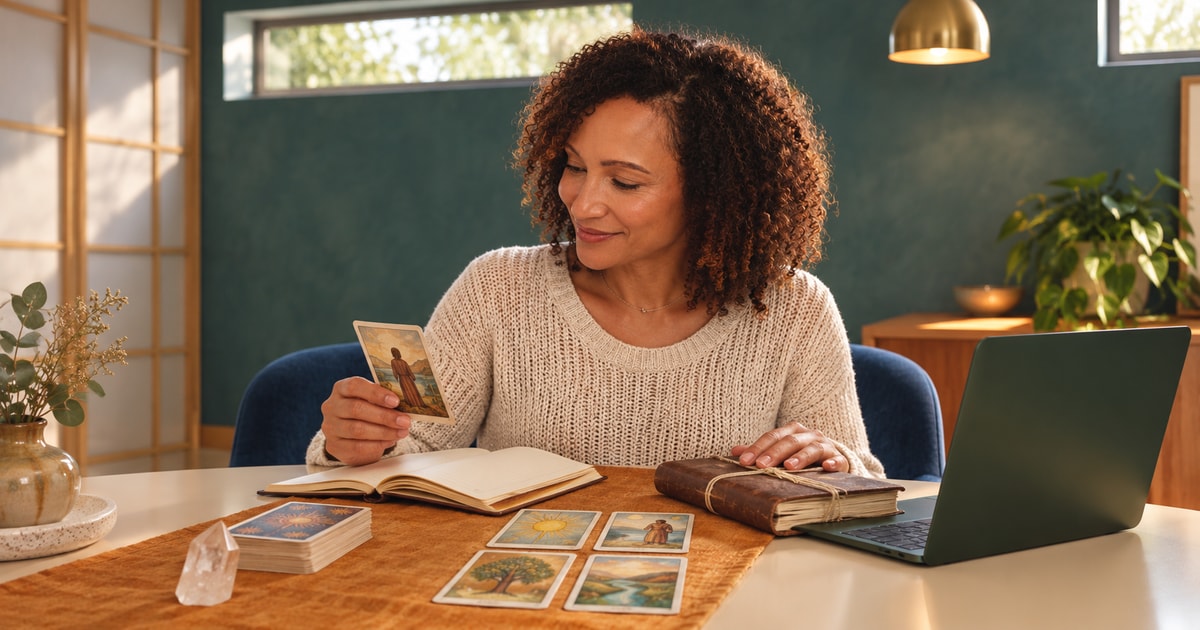
Instead of asking a card to tell you what happened, name the experience you want to consider first. Then ask what the image highlights about your response, a pattern you recognise or a value that has changed. You do not need a dramatic revelation for the exercise to be worthwhile.
A simple notebook practice
Keep three short notes rather than blending memory and interpretation into one story. They can be three headings on a page; there is no need for a special journal.
- 1. What I recall
- Describe the event in plain language. Mark uncertain details as uncertain; a memory is not automatically a complete record.
- 2. How I understand it
- Write the story or feeling you attach to it. Let the card suggest a question, not add a new historical fact.
- 3. What I choose now
- Name one need, boundary or small action that matters in your present life. You do not have to resolve the whole chapter.
- Choose a manageable memory. Start with an ordinary transition, a friendship or a decision you already remember—not an experience you feel pressured to uncover. You can choose a happy memory too.
- Write before drawing. Note the event, an approximate date if you know it, and what you remember feeling. Keep “I do not remember” where that is the honest answer.
- Draw one card and notice the picture. Name the detail that catches your eye before reaching for a fixed meaning: a gift, a bridge, a departing figure or a doorway. Ask what it brings to mind.
- Try another interpretation. Write your first response, then a second possibility. Would the image fit a different event just as easily? A strong fit can feel meaningful without proving the reading is historically accurate.
- Finish with kindness and a present choice. Ask what you would say to a friend in the same situation. Choose a useful next step, close the notebook and return to your day. You may stop earlier whenever you want.
If a card seems to confirm the story you already tell yourself, consider confirmation bias: we can favour information that supports existing beliefs. Also distinguish “I can see a pattern now” from “I knew this would happen then.” Neither hindsight nor a familiar symbol establishes what you or someone else knew at the time.
Four cards that can open a useful question
These examples use Rider–Waite–Smith imagery; your deck may look different. The Six of Cups has a long association with looking back in A. E. Waite’s early guide. The questions below are invitations for reflection, not a way to identify a particular event from a card.
Six of Cups: care and nostalgia
In the Rider–Waite–Smith image, children and flower-filled cups appear in a garden setting. This can bring attention to generosity, childhood or the way a memory has softened with distance. It need not mean that childhood was happy or that you should return to someone.
Ask: What kind of care do I remember, and what would I like to offer myself now?
Five of Cups: loss and what remains
A cloaked figure faces three fallen cups while two remain upright behind. Regret and disappointment are common ways to read this scene. Looking for what remains does not require minimising a loss or being grateful before you are ready.
Ask: What am I grieving, and is there any support I have not yet noticed?
Eight of Cups: leaving a chapter
A figure walks away from a group of cups toward a distant landscape. As a reflection prompt, it can invite you to consider a departure, a changing priority or something you outgrew. It does not prove that leaving was right—or tell you to leave now.
Ask: What was I moving away from, and what was I hoping to find?
Ten of Pentacles: what gets passed on
An older person, adults, a child and dogs appear around a household archway. Family, continuity and resources are familiar themes. You might explore a learned belief or a useful tradition without assuming a card reveals your ancestors’ experiences.
Ask: Which inherited expectation do I want to keep, adapt or set down?
For a closer look at nostalgia and changing perspectives, continue with the Six of Cups upright and reversed guide. A reversal can be another interpretive angle; it is not proof that a memory is false or a family story is hidden.
A worked example: a job that ended
Here is how the distinction can work with an everyday life chapter. You might draw the Five of Cups and write:
- The remembered event
- “My fixed-term job ended last year.” That describes the situation without turning it into a judgment about your worth.
- The story attached to it
- “I failed, and every future employer will see it that way.” Notice that the second part is a fear about the future, not something the past card has established.
- The Five of Cups prompt
- The fallen cups might reflect disappointment. The upright cups could prompt you to name skills, a supportive colleague or something you learned. These are possibilities to explore, not instructions to deny the loss.
- One present choice
- Write down one skill you can describe in an application, or ask a trusted person for feedback on your experience. You can acknowledge disappointment and still take a modest next step.
The card has not changed the event. It has offered a different question about the meaning you carry forward. You can accept the perspective, adapt it or decide it does not fit. For a fuller writing exercise, try the tarot story journaling spread.
Memory, past-life symbolism and spiritual meaning
Some people bring past-life beliefs or ancestral symbolism to tarot. You do not have to abandon a spiritual belief to keep your notes clear. If you explore an imagined scene, label it as a spiritual story, meditation or symbolic impression—not a confirmed event in this life or another.
A card cannot verify a past identity, reveal a forgotten event or establish that someone harmed you. Equally, it cannot prove that a reported memory is untrue. Avoid a reader who pressures you to accept a specific hidden-history explanation, supplies names or dates as certainty, or insists that more paid sessions will uncover the truth.
The American Psychological Association’s guidance on uncertain memories stresses an unbiased approach and the importance of corroborating information. If an upsetting memory or uncertainty needs attention, a qualified mental-health professional with relevant experience can help you explore it without steering you toward a predetermined story.
When to pause rather than pull another card
Set the deck aside if the practice leaves you frightened, caught in repeated checking or overwhelmed by the past. You do not have to revisit a painful experience to complete a spread. Choose an ordinary present-day activity, contact someone supportive or seek professional help as appropriate.
If distress, nightmares, intrusive memories or difficulty functioning are affecting your life, NIMH’s guidance on coping with traumatic events explains routes to support. In the United States, call or text 988 for a mental-health or suicide crisis; call 911 in a life-threatening emergency.
Carry the insight into the present
You can respect the person you were, notice what has changed and choose what to carry forward. For more journaling ideas and ways to keep the practice supportive, read Tarot and Mental Wellness.