

A meaningful encounter does not need a fixed message
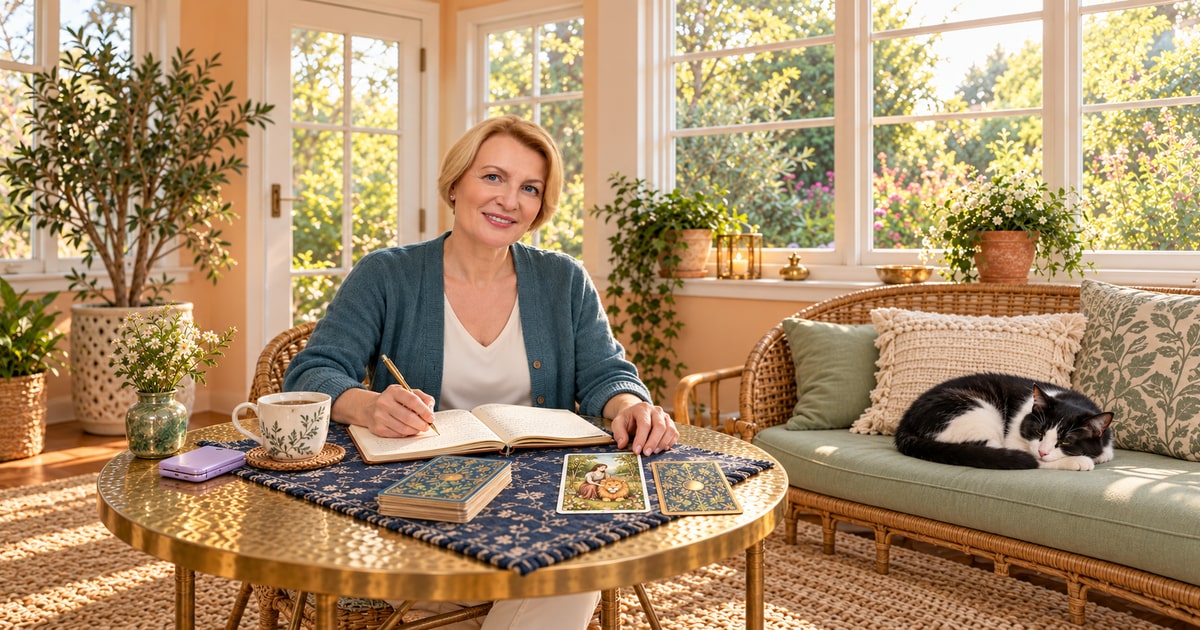
A cat resting nearby or a bird you keep noticing can feel comforting, intriguing or spiritually significant. You may understand the experience as a moment of connection with nature. That personal meaning does not establish why an animal approached, prove that you have a special gift or guarantee an event to come.
It helps to keep two questions separate: what might be happening for the animal, and what does the encounter bring up for you? The first calls for attention to species, context and safety. The second can become a thoughtful tarot or journaling practice.
Is an animal approaching, or are you noticing it more?
An animal coming closer and repeated sightings are different experiences. A familiar pet may seek company; a wild animal may be near a food source or used to people. Seeing the same species on a regular route may also reflect where it lives and where your attention goes.
Posture, movement and the circumstances matter, but there is no universal body-language trick that makes every animal trust you. An approach is not automatically affection or permission to touch. You do not have to crouch, offer food or move closer to test whether an animal is drawn to your “energy.”
You can still find the encounter meaningful. A personal spiritual interpretation and a practical explanation can sit alongside each other, provided the interpretation does not override the animal’s needs or become certainty about your future.
Six animals to use as reflection prompts
These are optional associations, not a dictionary of omens or a description of what an animal intends. Meanings vary with experience and cultural context. Use a question that genuinely speaks to you, change it or leave it aside; you do not need to borrow a tradition you have not studied.
Dog
- Possible association
- Company, openness or loyalty may be what a dog brings to mind for you.
- A question to try
- Who am I loyal to, and is that relationship reciprocal?
Cat
- Possible association
- Comfort, independence or choosing when to be close.
- A question to try
- Where do I need to be more selective with my time?
Crow or magpie
- Possible association
- Curiosity, cleverness or paying attention to overlooked details.
- A question to try
- What have I been noticing but not acting on?
Heron or another water bird
- Possible association
- Stillness, patience or waiting before making a move.
- A question to try
- What am I rushing that might benefit from a slower pace?
Fox
- Possible association
- Adaptability, privacy or finding another route.
- A question to try
- Where am I adapting well, and where am I hiding?
Butterfly or moth
- Possible association
- Change, a passing season or a different way of moving through life.
- A question to try
- What stage of a change am I in, and what does it need from me?
For instance, a dog’s appearance cannot tell you whether another person is loyal. That question is an invitation to consider the relationship’s actual behaviour, not to use the animal as evidence about someone else.
Animal imagery in the Rider-Waite-Smith deck
Animals appear in many tarot traditions, but their roles are not identical across decks. In familiar Rider-Waite-Smith imagery, the following details offer places to begin. These are possible readings, not the only meanings of the cards.
-
The Fool: a small dog
You might explore companionship, enthusiasm or a caution you have not noticed. The image does not give every dog you meet a single fixed meaning.
-
Strength: a woman and a lion
This pairing can invite reflection on courage, patience and how you relate to strong feelings. It is symbolic imagery, not a model for handling a real lion or other wild animal.
-
The Moon: a dog and a wolf
The contrasting animals may prompt questions about instinct, uncertainty or the familiar and unfamiliar. Your experience of the card matters; the picture does not identify a hidden threat in your life.
-
Nine of Pentacles: a bird on the figure’s hand
You might consider care, skill or the relationship between independence and support. Notice the whole garden scene rather than assigning the bird one compulsory lesson.
-
Queen of Wands: a black cat
Some readers connect the cat with independence, confidence or intuition. Those are interpretive associations, not facts about black cats or a reason to fear an animal’s colour.
If you want to explore a whole card rather than one symbol, see the Fool card guide or the Moon card guide. Look at the animal’s position, the surrounding scene and your question together.
A short practice that keeps meaning and observation separate
-
Record the observation first
Write what happened without a conclusion: “A crow was on the fence during my morning walk.” Include the place and context. “A crow warned me” is already an interpretation, not the same observation.
-
Give practical context a place
Consider whether you regularly pass the same habitat, have noticed the species more since learning about it, or were near food. You do not need to settle on one explanation before journaling, and you cannot infer an animal’s whole intention from one encounter.
-
Choose your own association
Write up to three qualities the animal suggests to you, then choose one question from the examples. If you use tarot, look at a relevant card in your own deck or choose an image deliberately. There is no need to draw repeatedly until a preferred message appears.
-
End with a proportionate action
Choose something within your control: slow down, contact a friend, protect some quiet time or simply appreciate the moment. Keep major decisions grounded in the facts of your situation and other people’s expressed wishes, not in a sighting alone.
An imagined canal-side example
- Observation
- “A heron stood beside the canal while I hurried past.”
- Personal association
- “Its stillness reminds me of patience.”
- A question
- “Where could I pause before responding?”
- A small action
- “I will reread my draft message before deciding whether to send it.”
The heron has not instructed anyone to send or withhold a message. The observer has chosen to use the moment as a reminder to pause.
Let care for the animal come first
With an unfamiliar dog, do not treat coming closer or a wagging tail as a reliable invitation to touch. Avoid sudden reaching or staring, and ask the owner before attempting any interaction. The RSPCA’s unfamiliar-dog guidance explains why context and warning signals matter. A pet choosing distance is not a judgment of your character or spirituality.
Wildlife needs a different response: observe at a distance, do not feed or try to touch it, and follow local species-specific guidance. The National Park Service’s wildlife-watching guide advises giving animals room and moving back if they approach. Park distances vary; a close encounter is not a reason to ignore those rules.
If an animal seems injured, sick, lost or unusually willing to approach, seek advice from the appropriate local animal service, wildlife rehabilitator or park staff rather than trying to handle it yourself. Keep children and pets away from wildlife. You can care about an animal without making physical contact.
Keep what feels grounding
A useful reflection leaves room for curiosity, practical care and choice. You can appreciate a repeated sighting, make a journal entry and continue your day without deciding that it must be a sign. You can also hold a personal spiritual meaning without expecting everyone else to share it.
For a wider discussion of spiritual experience, tarot and staying grounded, continue with the spiritual awakening guide. Let the encounter open a question, not close off other explanations.
Connection can be gentle
Notice the animal, respect its space and listen to what the experience brings up in you. A small act of attention can be worthwhile without turning another living creature into a verdict about your life.