

Quick guide
A psychic medium is a reader who claims to receive messages from people who have died and pass them on to the living. A psychic, in the usual sense, claims to sense things about your life, past, present or future, without that contact. The two labels overlap in practice, and many readers use both. No controlled test has shown that anyone can communicate with the dead, and the reason sittings often feel accurate is well understood: cold reading, which is a set of conversational techniques, and the Barnum effect, which is our tendency to accept vague statements as personal. That does not mean every medium is dishonest, and it does not mean a sitting cannot be comforting. It means you should go in with a budget, a clear head and a plan for your own grief. This guide explains what mediums claim, how to tell psychic from medium, how readings persuade, how to sit safely, and when grief needs more than a reading.
People go to mediums for one main reason: someone they loved has died and they want to hear from them. That is an understandable wish, and it deserves an honest answer rather than either a sales pitch or a sneer. This article tries to give one. It explains the claims plainly, lays out what is known about why readings feel true, and offers practical rules for anyone who decides to book a sitting anyway.
What a medium claims to do
Mediumship is the claim that a living person can receive communication from the dead. Mediums describe this in different ways. Some say they hear words or names, some see images, some feel a presence or a physical sensation such as pressure in the chest that they attribute to a person’s cause of death. Many describe a spirit guide, an unseen helper who manages the connection. A sitting usually involves the medium offering impressions, a name, an initial, a month, a piece of jewellery, a personality trait, and asking you whether they make sense.
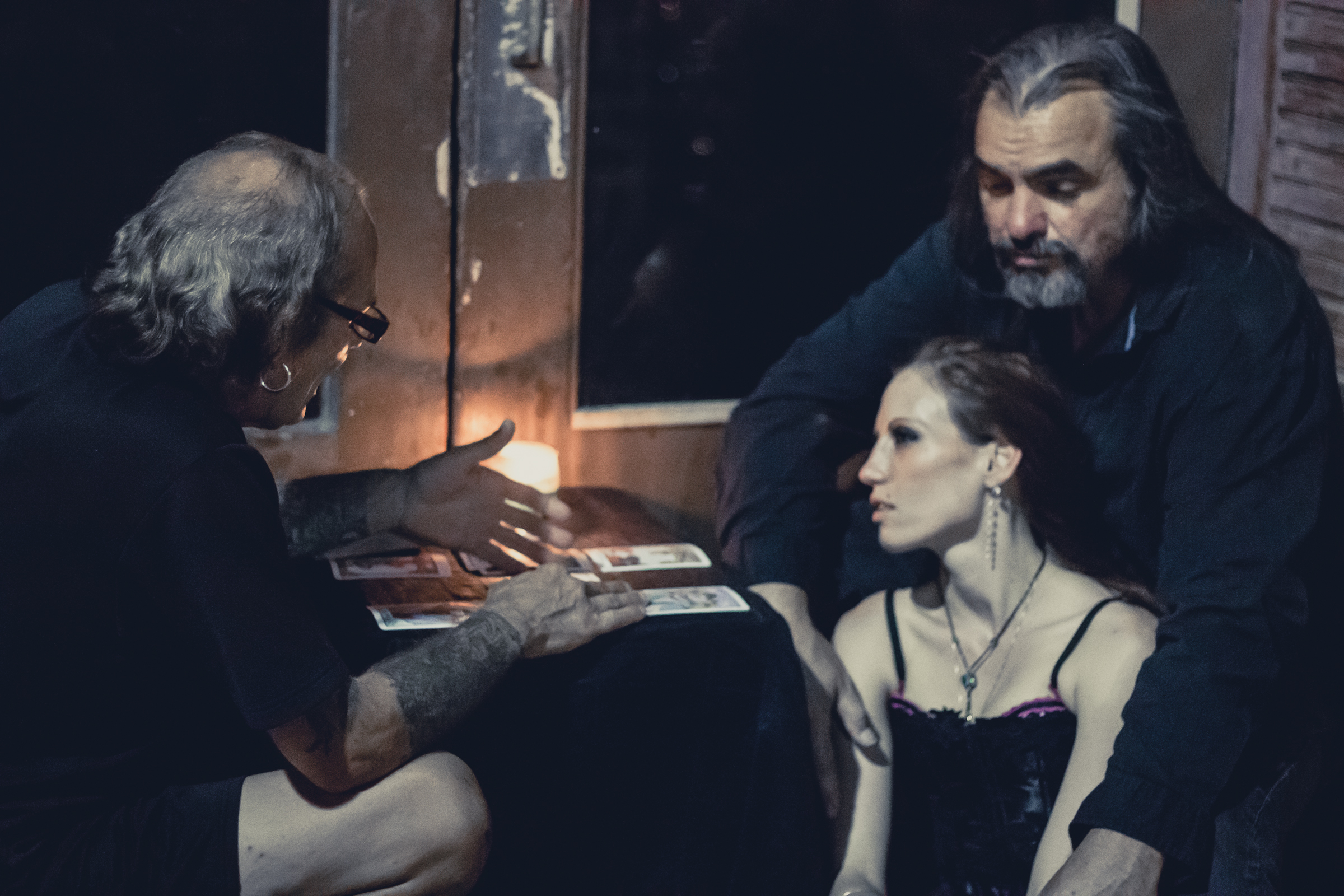
Some mediums work in private one-to-one sessions, by phone or video. Others do platform or gallery work, standing in front of an audience and offering messages to the room until someone claims them. A smaller number offer psychometry, holding an object that belonged to the deceased, or readings from photographs. In every format the structure is the same: the medium offers, you confirm or deny, and the reading is built from the exchange.
Psychic versus medium: the difference
A simple way to remember it: a medium claims contact with the dead; a psychic claims insight into the living. Most mediums also describe themselves as psychic, but many psychics do not claim mediumship at all. Tarot readers sit in a third group: they use a fixed deck with traditional meanings as a tool for reflection, and a good one makes no claim of contact with anyone.
| Psychic | Medium | |
|---|---|---|
| Central claim | Senses information about your life, relationships or future | Receives messages from people who have died |
| Typical questions | Will this job work out? Is he the right person? What should I do? | Is my mother at peace? Does my father know I am sorry? Is there a message for me? |
| Common tools | Tarot, oracle cards, astrology, palmistry, or nothing | Usually none; sometimes an object or photograph |
| How a session runs | You ask; the reader answers or lays cards | The medium offers impressions; you confirm or deny |
| What testing shows | No reliable evidence of ability beyond chance and reading cues | No reliable evidence of contact with the dead under controlled conditions |
| Main risk | Making decisions on a prediction | Spending heavily while grieving; delaying real support |
Why readings feel accurate: cold reading and the Barnum effect
Two well-documented effects explain most of what happens in a persuasive sitting, and they work whether or not the medium intends them. The first is cold reading, a set of techniques for producing apparently specific information from a stranger. The second is the Barnum effect, named after the showman P. T. Barnum: people rate vague, general statements as highly accurate descriptions of themselves, especially when the statements are flattering or come from someone presented as an authority.
- High-probability statements. I am getting an older man with a heart or chest condition. Most families have one. If you nod, the hit is recorded; if you shake your head, the medium moves on and the miss is forgotten.
- Shotgunning. Offering several options at once, a J name, John or James or maybe Joan, and letting you pick the one that fits. The sitter supplies the specificity and remembers it as the medium’s.
- Questions phrased as statements. He was stubborn, was he not? You answer; the medium now has a confirmed fact to build on.
- Reading the room. Age, clothing, a wedding ring, a tissue in hand, the way you react to each guess. Skilled readers adjust in real time and sitters rarely notice the steering.
- The rainbow ruse. A statement that covers both ends of a trait: she could be very outgoing but also needed time alone. It is true of nearly everyone and feels personal.
- Hot reading. Information gathered beforehand from booking details, social media or a chat in the waiting room. This one is straightforward deception, and it is why you should give nothing away before and during a sitting.
None of this requires a medium to be cynical. A sincere person who believes they are receiving messages can use every one of these techniques without noticing, because they are simply what a conversation looks like when one side offers and the other confirms. The sitter’s own memory does the rest, keeping the hits and dropping the misses, a habit psychologists call confirmation bias.
How to approach a medium reading safely
- Decide the money first. Set a single fixed amount for one sitting, pay only that, and never agree to follow-up sessions on the spot.
- Give nothing away. Book under a first name, keep social profiles private beforehand, and answer with yes, no or I am not sure rather than filling in details.
- Write it down or record it. With permission, record the session, then listen back a week later and count the misses as well as the hits.
- Treat it as a story, not a verdict. Let the reading be a way of thinking about the person you lost. Do not treat any statement as a fact about them or about you.
- Make no decisions from it. Nothing said in a sitting should change a will, a relationship, a medical choice or a move. If it would, talk to the relevant professional first.
- Go with a plan for afterwards. Readings can stir strong feelings. Arrange to see a friend, take a walk, or do something ordinary, rather than sitting alone with it.
Red flags that end the conversation
- A curse, block or negative energy that they can clear for a fee. This is the classic scam script. No genuine reader needs extra money to remove something they have just discovered. The Federal Trade Commission explains what to do if you were scammed.
- Pressure to book again today. Urgency is a sales technique, not a spiritual one.
- Fear as a tool. Any message that frightens you about your health, your children or your safety is a reason to leave, not to pay more.
- Requests for personal data. Dates of birth, addresses, bank details or passwords have no place in a reading.
- Discouraging other help. A reader who tells you to stop therapy, medication or contact with family is causing harm.
Grief and when to seek support
Most people who visit a medium are grieving, and grief is not an illness. It comes in waves, it lasts longer than other people expect, and wanting one more conversation with someone you lost is a normal part of it. A sitting can give a sense of comfort or closure, and if you go in with the rules above, that comfort need not cost much or lead anywhere harmful.
Grief sometimes turns into something that needs more than time. If, months on, you are unable to work or care for yourself, if you feel persistently empty or hopeless, if sleep and appetite have collapsed, or if you find yourself returning to readers again and again at growing cost, those are signs to talk to a doctor or a grief counsellor. The National Institute of Mental Health’s page on depression explains the difference between ordinary low mood and something that benefits from treatment. If you have thoughts of harming yourself, call or text 988 in the United States to reach the Suicide and Crisis Lifeline.
Where tarot fits
Some readers combine mediumship with tarot, and some tarot readers describe cards as a way of connecting with spirit. On this site tarot is treated differently: it is a structured way to reflect and decide, using the traditional meanings attached to the Rider-Waite-Smith deck of 1909. Pulling the Six of Cups after a loss can open a useful conversation about memory; the Three of Swords can name heartbreak; the Star can prompt thoughts about recovery. None of that is contact with anyone. It is you, a picture and a quiet moment, which is often exactly what grief needs.
Key takeaways
- A medium claims to relay messages from the dead; a psychic claims insight into the living; a tarot reader uses a fixed deck as a reflection tool.
- No controlled test has demonstrated communication with the dead; readings feel accurate because of cold reading and the Barnum effect.
- If you book a sitting, fix the budget, give nothing away, record it, and make no decisions from it.
- Curse removal for a fee, pressure to rebook, fear and requests for personal data are reasons to walk away.
- Grief is normal; lasting hopelessness, inability to function or repeated costly readings are reasons to seek support.
Related reading
- How Accurate Are Tarot Card Readings?
- 5 Tips for a Great Tarot Card Reading
- Breaking a Curse: The Scam Script Explained
- Tarot and Mental Wellness
- Psychics and Tarot Cards
- Introduction to Tarot Cards and How They Work
Frequently asked questions
1. What is a psychic medium?
A psychic medium is a reader who claims to receive messages from people who have died and pass them to the living, often alongside more general psychic claims about your life.
2. What is the difference between a psychic and a medium?
A medium claims contact with the dead; a psychic claims insight into the living, such as your relationships or future. Many readers use both labels, but the claims are different.
3. Has mediumship ever been proven?
No. Under controlled conditions, where the medium cannot see or hear the sitter and feedback is removed, no reliable evidence of communication with the dead has been produced.
4. Why did my reading feel so accurate?
Usually because of cold reading, in which the medium offers high-probability statements and builds on your responses, and the Barnum effect, our tendency to accept vague statements as personal. Memory then keeps the hits and drops the misses.
5. What is cold reading?
A set of conversational techniques for producing seemingly specific information from a stranger: general statements, multiple-choice guesses, questions phrased as statements, and adjusting to the sitter’s reactions.
6. What is the Barnum effect?
The tendency to rate vague, general descriptions as accurate portraits of oneself, especially when they are flattering or come from an apparent authority. It explains why horoscopes and readings feel personal.
7. Are all mediums frauds?
No. Many sincerely believe in what they do, and cold reading can happen without intent. Sincerity does not make the messages real, and deliberate deception does exist, so the same precautions apply either way.
8. Is it safe to see a medium while grieving?
It can be, if you fix a budget, give nothing away, make no decisions from the reading and have support afterwards. If you find yourself returning repeatedly at growing cost, that is a sign to pause and talk to someone.
9. How much should a medium reading cost?
Prices vary widely. The safe rule is a single fixed amount you can afford to lose entirely, paid once, with no follow-up booked on the day.
10. What should I never tell a medium?
Full names, dates, causes of death, family details and anything that could be searched online. Answer with yes, no or I am not sure, and let the medium do the work.
11. What if a medium says I have a curse or negative energy?
Leave. Offering to remove a curse or block for a fee is the classic scam script, and no genuine reader needs extra payment to fix something they have just announced.
12. Can a tarot reader contact the dead?
No. Tarot is a deck of pictures with traditional meanings, used for reflection. A card can prompt thoughts about a person you lost, but it does not carry a message from them.
13. When does grief need professional support?
When, months on, you cannot work or care for yourself, feel persistently hopeless, have lost sleep and appetite, or have thoughts of self-harm. A doctor or grief counsellor is the right first call, and 988 is available in the United States.
14. What is a gallery or platform reading?
A medium stands before an audience and offers messages to the room until someone claims them. With dozens of people present, general statements are almost certain to fit somebody.
Evidence note: This article describes what mediums claim and does not endorse those claims; no controlled study has demonstrated communication with the dead. The explanation of the Barnum effect draws on the linked Britannica entry, and the scam guidance links to the Federal Trade Commission. Card meanings mentioned are Rider-Waite-Smith (1909) traditions and interpretive conventions, not findings, and tarot has not been shown to predict events or contact anyone. For grief that is not lifting, see the National Institute of Mental Health page linked above or speak to a doctor; in the United States, call or text 988 if you have thoughts of harming yourself.