

Quick answer
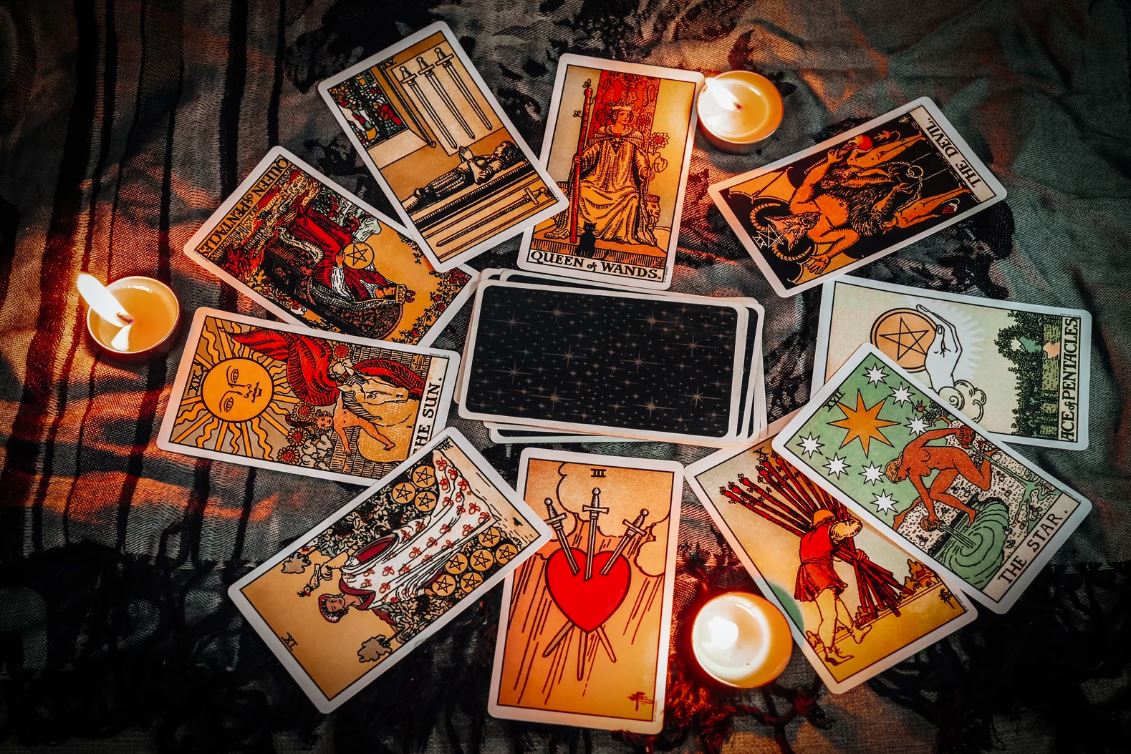
A tarot reading is laid out as a spread: a set pattern of positions, each with a job such as “the situation”, “what is in the way” or “advice”. The reader shuffles, asks a question, deals cards into those positions and reads each card in the light of its position. That is the whole mechanism. The spread is what turns a pile of cards into a structured conversation, and understanding how one is built is the step that makes tarot click for most beginners. You can do a good reading with one card, and you rarely need more than five.
How a reading is laid out, position by position
Every spread answers three questions before a card is dealt: how many cards, what each position means, and in what order you read them. A one-card draw has a single position, usually “what to notice today”. The classic three-card spread uses past, present and future, though many readers prefer situation, obstacle, advice because it gives you something to do rather than something to wait for. Five cards add context on either side. The Celtic Cross, with ten positions including hopes and fears and the outcome, is the famous one, but it is a lot to hold in your head and is better learned once three-card readings feel easy. The key habit is to decide the positions before you deal, write them on a slip of paper, and read each card as an answer to that position’s question. The Three of Wands in a “what is in the way” slot reads very differently from the same card in “advice”.
| Spread | Cards | Positions | Best for |
|---|---|---|---|
| One-card draw | 1 | What to notice today | Daily practice and learning cards |
| Three-card, timeline | 3 | Past, present, future | Seeing how a situation developed |
| Three-card, action | 3 | Situation, obstacle, advice | Most everyday questions |
| Five-card cross | 5 | Centre, what helps, what hinders, what to release, next step | A decision with several moving parts |
| Celtic Cross | 10 | Situation, challenge, root, past, goal, near future, self, surroundings, hopes and fears, outcome | A full picture once simpler spreads are familiar |
Reading order matters too. Most readers turn the cards one at a time, say what each position asks, and only then look at how the cards relate across the whole layout. The spreads guide shows several layouts drawn out if you want to see them.
Keep in mind: A spread organises your thinking; it does not predict. Position names like “future” or “outcome” describe where a situation seems to be heading if nothing changes, in the Rider-Waite-Smith tradition, and are prompts to act rather than forecasts. Questions about health, money, legal matters or safety belong with a qualified professional.
Read the full guide
The beginners hub explains the deck’s structure, how to choose and ask a question, and how to build from a one-card draw to full readings.